
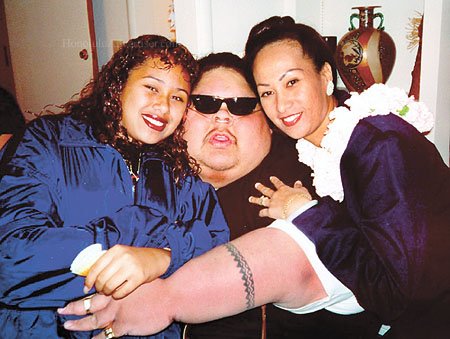
Ceslie-Ann Kamakawiwo’ole carries forward a profound cultural legacy rooted in Hawaiian music and identity. As the daughter of Israel Kamakawiwo’ole, she upholds a tradition of storytelling through song.
Roots in a Musical Dynasty
Born into a family deeply embedded in Hawaiian musical traditions, Ceslie-Ann grew up surrounded by the sounds of slack-key guitar and mele. Her father, Israel Kamakawiwo’ole, became a global symbol of Hawaiian pride with his 1993 rendition of ‘Somewhere Over the Rainbow.’ This iconic performance brought international attention to Hawaiian music and culture. Public records covering this story are gathered in Israel Kamakawiwoʻole
The Kamakawiwo’ole family has long been recognized for their contributions to preserving indigenous Hawaiian language and customs. Ceslie-Ann’s upbringing was shaped by these values, with music serving as both art and cultural education. She learned early that songs were not just entertainment but vessels of history and identity.
Her father’s influence extended beyond music into community activism and cultural advocacy. He used his platform to speak about Native Hawaiian rights and environmental stewardship. Ceslie-Ann absorbed these principles, understanding that her role included both artistic expression and social responsibility. Public records covering this story are gathered in What happened to Ceslie-Ann Kamakawiwo'ole? All the details
Carrying the Torch Through Song and Service
Ceslie-Ann Kamakawiwo’ole has dedicated her life to honoring her father’s memory while forging her own path. She performs his songs at cultural events, ensuring that new audiences experience the emotional depth and cultural significance of his work. Her performances often include spoken reflections on Hawaiian history and values.
Beyond the stage, she engages in educational outreach. Ceslie-Ann visits schools and community centers to teach children about Hawaiian language, music, and traditions. She emphasizes the importance of knowing one’s roots in a rapidly changing world. Her workshops often blend song, storytelling, and hands-on activities to make learning engaging.
She also collaborates with cultural organizations to support language revitalization efforts. The decline of ʻŌlelo Hawaiʻi, the native Hawaiian language, has been a concern for decades. Ceslie-Ann participates in programs that integrate music into language instruction, helping learners connect emotionally with the words they study.
What Is Confirmed and What Remains Unverified
However, specific details about her early life, such as exact dates of birth or formal education, are not widely published. While she is known to have performed publicly for many years, comprehensive discographies or full biographies are not readily available.
Her collaborations with other Hawaiian artists are acknowledged in local media, though full project details are often sparse.
Why Cultural Stewardship Matters Today
In an era of globalization, figures like Ceslie-Ann Kamakawiwo’ole play a vital role in maintaining cultural diversity. Her work ensures that Hawaiian traditions are not reduced to tourist attractions but are respected as living, evolving practices.
By teaching younger generations through music, she fosters a sense of pride and continuity. This kind of cultural stewardship helps communities resist assimilation and reclaim their narratives. Her efforts contribute to broader movements for indigenous recognition and rights.
As digital media spreads Hawaiian music worldwide, Ceslie-Ann’s grounded, community-focused approach offers a counterbalance to commercialization. She reminds audiences that behind every song is a story, a language, and a people worth preserving.










Leave a Reply